How WeddingWire and The Knot Are Steering You Wrong When It Comes to Your 2026 Wedding Planning Budget
Let’s talk about one of the most common — and most damaging — budgeting conversations I hear from couples planning 2026 weddings.
A groom recently shared that a coworker told him they hosted their entire wedding in 2019 for $45,000 and had plenty to work with. And she wasn’t wrong — for 2019 Detroit, that budget went far.
But here’s the hard truth:
That same $45,000 in 2026 does not buy the same wedding. Not even close.
And sites like WeddingWire and The Knot are a big part of why couples don’t realize this until they’re already deep into planning.
Let’s Be Clear: $45K Is a Strong 2026 Wedding Budget
Here’s an important clarification: a $45,000 budget is absolutely a solid wedding budget in 2026.
A beautiful, meaningful, well-executed wedding is very doable at that price point. What matters is alignment.
Where couples run into trouble isn’t the number itself it’s expecting a $45K budget to support:
A 200–250 guest count
Full-scale custom branding
Immersive guest experiences
Large-format florals
Luxury rentals and top-tier vendors across the board
That’s not a budgeting issue; that’s a scope issue. When your vision, guest count, and design expectations align with your budget, $45K can absolutely produce an incredible wedding.
The 2019 Budget Comparison Is Setting Couples Up to Fail
Comparing your 2026 wedding budget to a wedding from 2019 (or earlier) is like comparing gas prices from two different economies.
In 2019:
Food costs were significantly lower
Labor costs were lower
Rentals were less design-forward
“Instagram-worthy” meant nice, not immersive
Fast forward 7 years, and weddings are no longer just hosted — they’re produced.
Instagram Changed the Wedding Standard (And the Price Tag)
Couples today aren’t just asking for a ceremony and reception. They’re asking for:
Custom branding throughout the day
Elevated guest experiences (live entertainment, grazing tables, champagne walls)
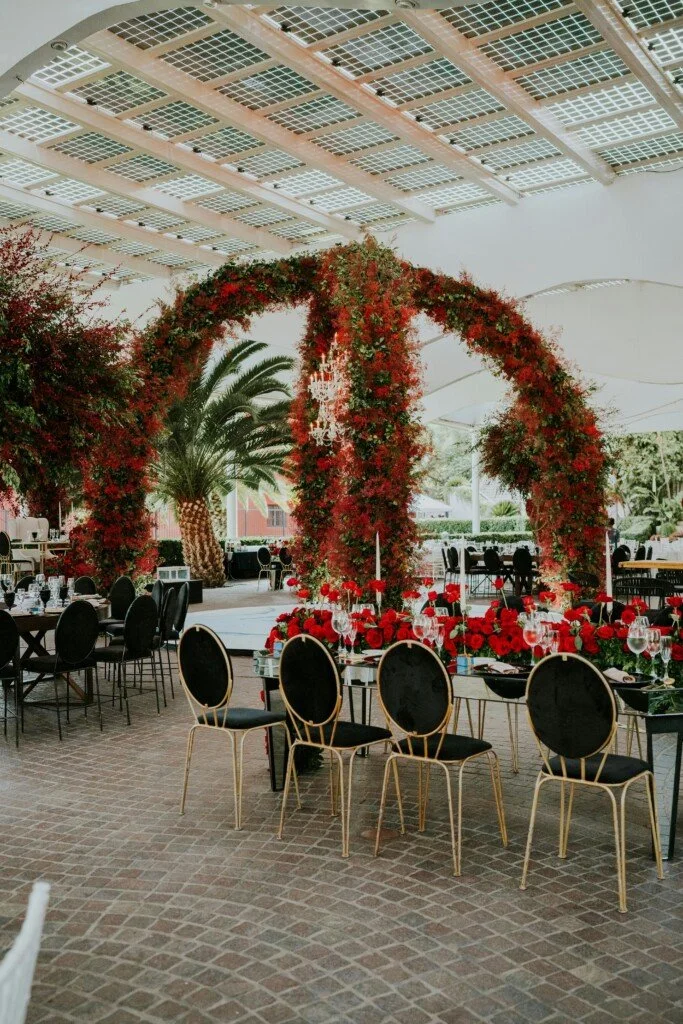
Large-scale floral installations
Statement furniture, luxury chairs, layered linens
Intentional lighting and visual moments
All of that costs money. Not because vendors are “overcharging,” but because the scope of weddings has expanded.
What used to be considered luxury is now seen as standard — and standard still comes with a price tag.
Guest Count Still Matters — More Than Couples Want to Admit
The average wedding guest count today sits around 150–175 guests. But many couples are planning for 200–250 guests, while expecting the same per-person spend they see quoted online.
Here’s the reality:
More guests = more food, alcohol, rentals, staffing, linens, florals, transportation, and labor
Per-person costs rise when designs become more complex
Larger guest counts reduce flexibility elsewhere in the budget… This isn’t opinion — it’s math.
Inflation, Food Costs, and Tariffs Are Not “Excuses”
Another uncomfortable truth: Budgets feel tighter because costs are genuinely higher.
Between:
Inflation
Rising food and beverage costs
Increased labor wages
Tariffs impacting imported décor, materials, and rentals
Vendors are working with thinner margins than ever, while being asked to deliver more. Ignoring these factors doesn’t make them go away. It just makes budgets unrealistic.
The Design Gap WeddingWire & The Knot Haven’t Caught Up To
Here’s where the biggest disconnect lives.
WeddingWire and The Knot still lump services together in ways that no longer reflect how weddings are actually executed.
They often assume:
The planner is the designer
Or the florist is the designer
But in today’s weddings, that’s frequently not true.
Wedding Designers & Stylists Are a Standalone Service Now
In modern weddings:
Designers/stylists develop the visual concept, layout, furniture plan, and aesthetic direction
Florists focus on florals and collaborate with designers on vessels and installations
Planners manage logistics, timelines, vendor coordination, and execution
These are separate roles — with separate pricing — and for good reason.
When budgeting platforms don’t acknowledge this shift, couples are left under-budgeted from the start. This is not to say that one service provider cannot or does not provide all three.
Other Real Costs That Are Missing From “Average Wedding Budgets”
Industry resources like The Wedding Report have updated their data to reflect what couples are actually spending on in 2026.
These include:
Pre-wedding events
Gown and floral preservation
Secondary outfits
Childcare and children’s entertainment
Visual spectacles and artistic performances
Interactive guest experiences
Travel and logistics fees
Live streaming services
Raw footage and drone photography
Design and décor services
WeddingWire and The Knot still largely ignore or minimize these categories and that’s a problem.

The Real Issue: Couples Are Budgeting for Yesterday’s Weddings
The issue isn’t that couples want “too much.” The issue is that:
They’re being shown outdated averages
For outdated wedding formats
In a completely different economic climate
That’s not helpful. And it’s not fair. Minimalist Weddings Are Still Very Much a Thing and Done Right, They’re Stunning
Not every wedding needs:
Over-the-top installations
Layered rentals
Multiple visual spectacles
Minimalist weddings, when designed intentionally, can be:
Elevated
Timeless
Editorial
Cost-efficient without feeling “cheap.”
But minimal does not mean unplanned or under-designed.
It means:
Fewer design elements, executed exceptionally well
Strategic investment in key moments
Intentional guest counts
Clean layouts and thoughtful styling
Minimalism done correctly is a design choice, not a compromise.
This isn’t about “Wedding Pricing”… it’s About Reality
This conversation is not about vendors inflating prices when the word “wedding” is mentioned.
What’s actually happening is:
Weddings now require more labor
Designs are more complex
Expectations are higher
Timelines are tighter
Experiences are layered
You’re not paying more for the label — you’re paying for the scope.
And when couples understand the real cost of what they’re asking for, two things happen:
Budgets make more sense
Stress during planning drops significantly
Hard Truth, Clear Expectations
WeddingWire and The Knot are useful starting points, but they are not modern budgeting tools.
If you’re planning a 2026 wedding and want:
Elevated design
Immersive guest experiences
Instagram-level visuals
A guest count over 175
Your budget must reflect today’s reality, not yesterday’s averages. A successful wedding budget isn’t about cutting corners; it’s about understanding what your vision actually costs and planning accordingly. And that’s where real strategy, not averages, comes in.
This blog isn’t meant to tell couples what they should spend.
It’s meant to help couples understand:
What different budget levels realistically support
How modern weddings are structured
Why clarity upfront prevents frustration later
You don’t need an $80K budget to have a beautiful wedding.
You do need:
Honest expectations
Clear priorities
A vision that matches your investment
When those pieces align, planning becomes smoother, decisions become easier, and your wedding feels just as good as it looks.